Choose for the kilometres you actually do
Highway terrain (H/T) and all-terrain (A/T) tyres are both used on 4x4s, SUVs and utes. The difference is the tread, the noise, the wear on the blacktop, and how much bite you get on dirt, gravel and mild off-road work. A mud terrain (M/T) tyre is a third option, and it is the wrong choice for a vehicle that almost never leaves the bitumen.
On the Gold Coast a lot of vehicles do the M1 or the highway during the week, then a beach car park, a worksite, or a run toward the hinterland on the weekend. That mixed use is why all-terrain is popular. It is not automatically the right answer for every SUV that never leaves suburbia.
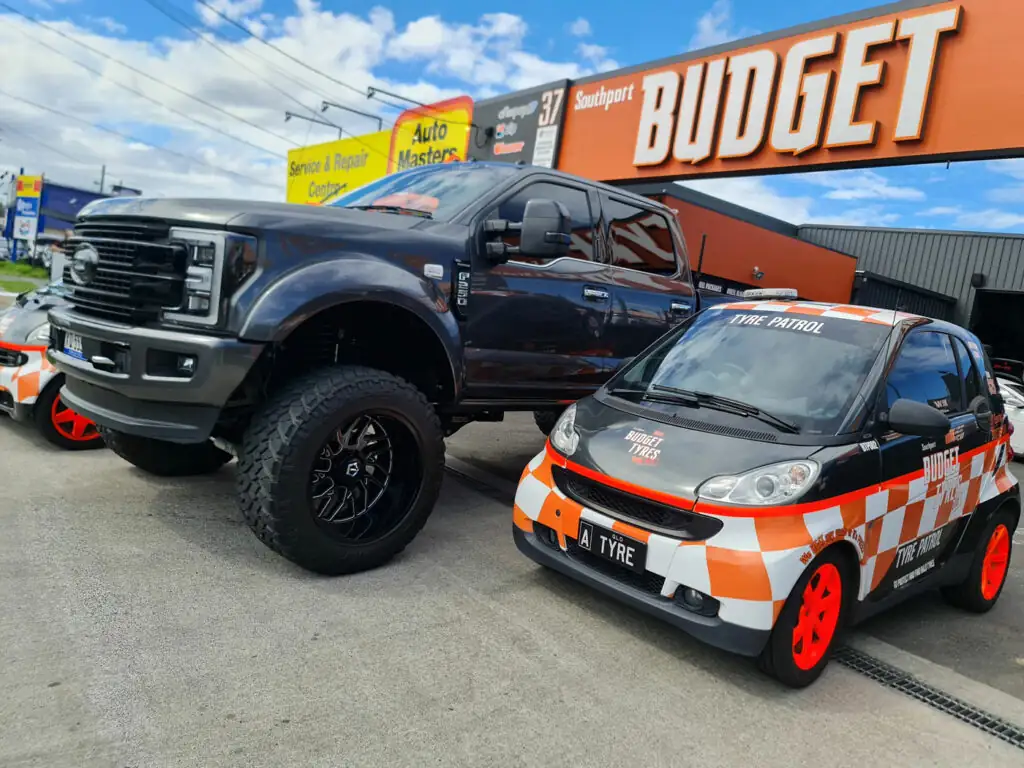
Southport Budget Tyres & Auto fits 4x4 tyres and ute tyres in highway, all-terrain and mud patterns, new and used, from $35 fitted. We'll beat any quote or your tyres are FREE. Tell us how you actually use the vehicle, not how you might use it one weekend a year.
Highway terrain: quieter, and usually longer wearing on the road
Highway terrain tyres have a tighter tread. They are aimed at sealed roads, with some ability on a dry fire trail or a well-kept dirt road. They tend to be quieter, and they often wear more evenly if you do mostly highway and suburban kilometres.
If your 4x4 or ute is a family car that tows occasionally and rarely leaves the bitumen, an H/T tyre is often the more comfortable daily choice. You still need the right load rating if you tow or carry tools. Load rating is not the same thing as tread pattern.
Wet grip still matters. Gold Coast rain is heavy. A worn highway tyre is not safer than a worn all-terrain tyre just because the pattern looks road-friendly. Tread depth and condition still come first.
All-terrain: the mixed-use compromise
All-terrain treads are more open. They give you more traction on gravel, dirt, wet grass and soft sand than a highway tyre, and they still have to be liveable on the M1. The trade-off is usually more road noise and, depending on the tyre and how you drive, a different wear rate on the bitumen.
A/T is a strong match if you regularly use unsealed roads, beach access, or hinterland tracks, and still commute. It is also common on work utes that see both the highway and a rough site. If you have a lift kit, or you want a slightly taller tyre, talk to us about what will actually fit before you buy. Then have a wheel alignment after fitting.
Mud terrain tyres have even more open blocks. They shine in mud and rocks, and they are noisy and quicker to wear on the highway. We stock and fit them when the use case is real, not because they look tough in the car park.
Pressure, load and matching the set
Whatever pattern you choose, set the pressure from the vehicle placard, and adjust only with a proper understanding of load and off-road use. Do not invent a beach number off a forum and leave it there for the drive home. See tyre pressure for Gold Coast driving.
Fit the same type of tyre on all four wheels unless the vehicle maker says otherwise. Mixing an all-terrain front with a highway rear, or mixing tread depths a long way apart, can change how the vehicle brakes and turns, especially in the wet or off the bitumen.
If you are replacing one damaged tyre, we will try to match the pattern and the remaining tread. A used tyre with up to 90% tread can be a sensible match. If the set is mixed and tired, it may be time for a pair or a full set.
We will quote more than one option
Call (07) 5527 0004 with your size, or use the size finder on this page. We will not pretend there is only one correct tyre. We would rather show you a highway option and an all-terrain option, with an honest note on noise and use, and let you decide.
The workshop is at 37 Egerton Street, Southport, a straightforward run from Nerang, Oxenford and Coomera. Most fitting is done while you wait. Afterpay, Zip and humm are available.
For the wider 4x4 range, start at 4x4 tyres. If you also want new rims, see wheel packages.